Session 1: Interview a Client

Unit 2
Digital Manufacturing
For Eight Weeks, You're a Firm
Each group is an engineering team, hired by a client to design and build an arcade cabinet that exists nowhere else.
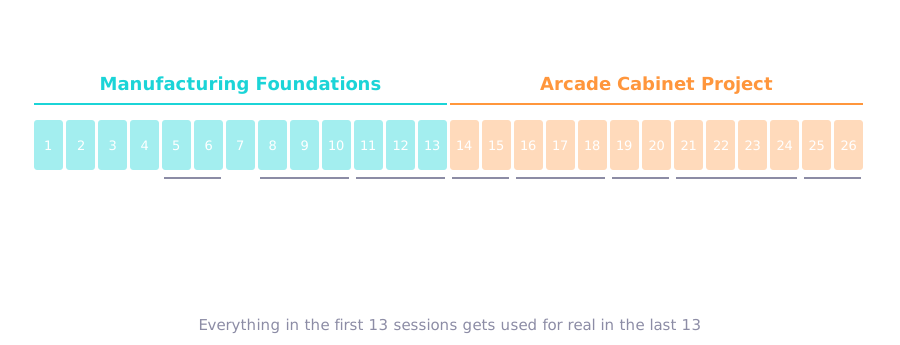
Three Machines, One Cabinet
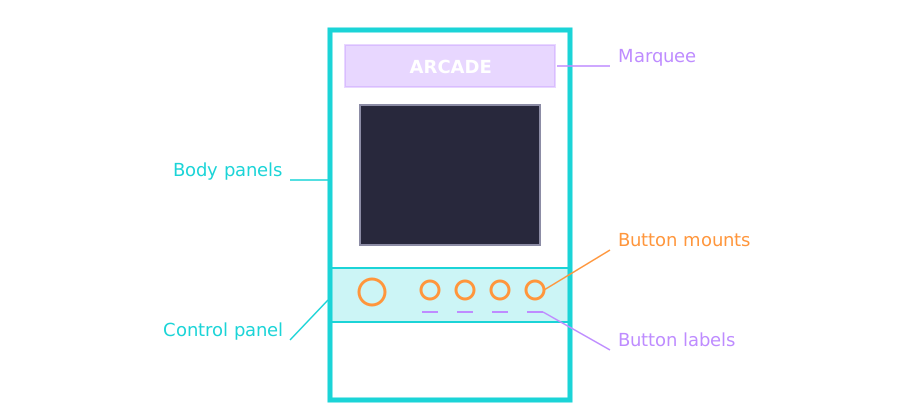
Each machine gets a session before the project needs it. Nothing in the cabinet is the first time you've used the tool.
You've Read a Client Brief Before
In Unit 1, Session 2, you took a written brief apart into the four parts and wrote one good question for a client who wasn't there to answer it.
You've Read a Client Brief Before
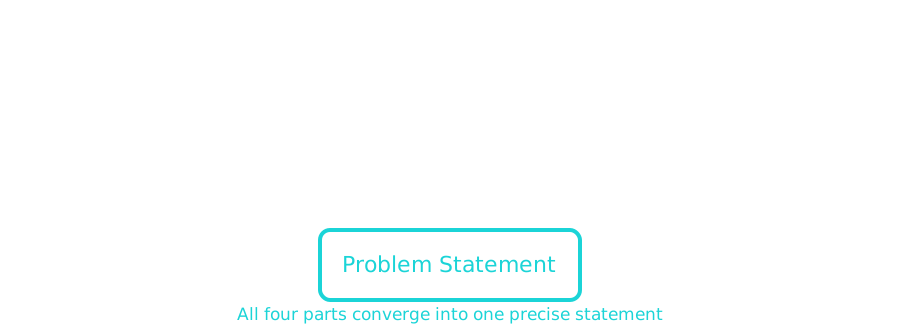
This time the client is in the room, and answers only what you ask.
Nobody Volunteers What They Haven't Thought About
A client tells you what's on their mind. The fact that decides your design is usually something they'd never think to mention.
The question you didn't ask is the constraint you discover during the build.
Today's Client
Ms. Delgado, from the city parks office:
"So, the bus stop on Elm, by the park. There's nowhere to sit. There used to be a bench, but it got wrecked and the city hauled it off, and now people just stand there, and when it rains they're standing in the rain. I've had a couple of calls about it. I was thinking maybe a little roof with a bench under it? Nothing fancy. We'd like something before winter, if that's possible."
Her Idea Isn't Her Need
"A little roof with a bench" is a solution in disguise: the client's guess at the answer, said as if it were the problem.
Why did people call? Who's standing there? For how long? The need is underneath, and you have to ask for it.
The First Answer Is Usually Vague
"Who uses this stop the most?"
"Oh, all kinds of people."
The First Answer Is Usually Vague
"Who uses this stop the most?"
"Oh, all kinds of people."
"Who's waiting there at ten on a weekday morning?"
A follow-up question is built from the answer you just got. It's where most of the real information comes from.
Write Down What She Said
Record her words, not your summary. "Some of the older folks can't stand that long" and "accessible" are not the same requirement.
Your guesses go in a separate column, marked as yours.
Today
Read the ask, plan your questions, interview Ms. Delgado, then turn her answers into requirements you could check a design against.
In Session 15, your arcade client gives you one Q&A. Today is the practice run.
Next Time
Session 2: Materials for the Router
What the cabinet is made of, and what ruins it.
'F' → Fullscreen
Build
Your instructor plays Ms. Delgado. The ask has nothing to do with arcades on purpose: today is practice for the Session 15 Q&A with your arcade client, not a head start on it.
Step 1: Read the Ask
"So, the bus stop on Elm, by the park. There's nowhere to sit. There used to be a bench, but it got wrecked and the city hauled it off, and now people just stand there, and when it rains they're standing in the rain. I've had a couple of calls about it. I was thinking maybe a little roof with a bench under it? Nothing fancy. We'd like something before winter, if that's possible."
On your own, fill in the four parts from the ask alone, and mark each one stated, implied, or missing. Find the solution in disguise.
Step 2: Plan Your Questions
As a group, write five questions and rank them, most important first. You may not get to all five. Include at least one about where the shelter will be and one about how she'll know it worked.
Step 3: The Interview
- Groups take turns, one question per turn, for three rounds.
- On your turn you may ask a follow-up to the last answer instead of your next planned question.
- Every answer is public. Log every answer, not just your group's, in her words as closely as you can.
Step 4: What Nobody Asked
After the last round, Ms. Delgado tells the class one or two things she knew all along that nobody asked about. For each one, write the question that would have found it.
Step 5: Requirements
Rewrite the four parts from the interview. Every line points to something she actually said. Make the success criteria checkable: a design either meets them or it doesn't, and two people wouldn't argue about which.
Checkpoint
- Is your need still "a roof with a bench"?
- That's her solution. The need is the problem the roof was meant to solve.
- Could you point to her words for every requirement?
- Anything you can't is your guess. Mark it as one, or ask.
- Could two people disagree about whether a design meets your success criteria?
- If so, they aren't checkable yet.
Reflection
Answer these on your own. Reflections are individual, even when the rest of the session was team work.
- Which answer changed your group's requirements the most, and what question got it?
- Pick one thing Ms. Delgado knew but nobody asked. What would have happened if the shelter had been built without it?
- Name one thing she said about where the shelter will be that would affect what it's made of.
Submit
Submit your sheet: your first read, your ranked questions, the interview log, what nobody asked, your requirements, and your reflection.