Activity 2.1: What Is Electricity?
Electronics Primer — Day 1 of 3

Activity 2.1
What Is Electricity?
Key Concepts
Voltage, Current, Resistance
Conventional Current
Microcontrollers (preview)
What Is Electricity?
Electricity is the flow of electric charge through a conductor — a wire, a wire on a breadboard, a trace on a circuit board. You can't see it happen, which makes it genuinely hard to reason about directly.
So instead, we're going to reason about it with something you can picture: water.
The Water Analogy
Imagine a pump pushing water through a pipe. Three things describe that system: how hard the pump pushes, how much water actually flows past a point each second, and how wide the pipe is.
Every electrical circuit has three matching quantities.
Voltage — The Pump's Push
Voltage is the "electrical push" that makes charge want to move — like how hard the pump is pushing the water. Measured in volts (V).
Current — The Flow Rate
Current is how much charge actually flows past a point each second — like the water's flow rate. Measured in amps (A).
Resistance — The Pipe's Narrowness
Resistance opposes the flow of charge — like a narrow section of pipe holding water back. Measured in ohms (Ω).
Putting It Together
| Water System | Electrical Quantity | Unit |
|---|---|---|
| Pump strength | Voltage | volts (V) |
| Flow rate | Current | amps (A) |
| Pipe narrowness | Resistance | ohms (Ω) |
A Backwards Convention
Circuit diagrams always show current flowing from + to −. But the actual charge carriers (electrons) move the opposite direction.
Early scientists guessed the direction before electrons were even discovered — they guessed wrong, but the convention stuck. Every schematic you'll ever read still uses it.
Coming Up: The Microcontroller
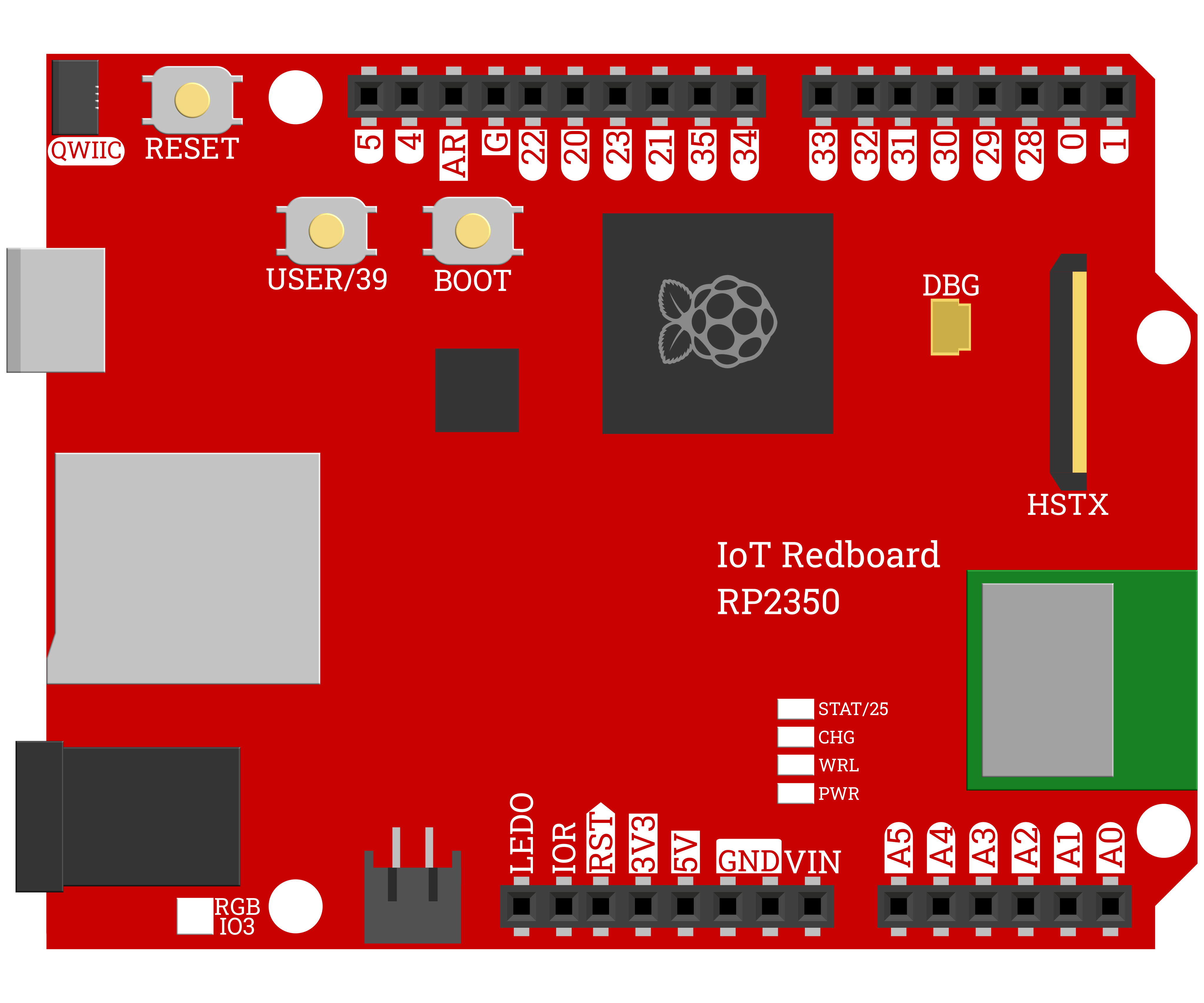
A microcontroller is a tiny computer that can control voltage and current in a circuit — turning pins on and off, reading sensors — following instructions you write in code.
Day 2 and Day 3 introduce the board you'll use all unit: the SparkFun IoT RedBoard RP2350.
Today's Objectives
- Explaining voltage, current, and resistance using the water analogy
- Naming the unit each quantity is measured in
- Explaining why conventional current flows opposite the actual electrons
Key Terms
- Voltage
- The electrical "push" that makes charge move, measured in volts (V).
- Current
- The rate charge flows past a point, measured in amps (A).
- Resistance
- Opposition to the flow of charge, measured in ohms (Ω).
- Conventional Current
- The historical convention that current flows from + to − in a circuit diagram, opposite the actual direction electrons move.
- Microcontroller
- A tiny computer that controls a circuit's voltage and current by following code.
'F' → Fullscreen
Practice
No circuits yet — today is about building the mental model you'll use for the rest of the unit. Answer each prompt in writing.
Task 1: Analogy Matching
- Match each water-system term to its electrical equivalent: pump strength, flow rate, pipe narrowness.
- Write the unit that goes with each electrical quantity.
Task 2: Predict the Behavior
- If you make a pipe narrower (increase resistance) but the pump strength (voltage) stays the same, does the flow rate (current) go up or down? Why?
- If you increase the pump's strength (voltage) but the pipe stays the same width (resistance stays the same), what happens to the flow rate (current)?
Task 3: Conventional Flow Check
- A circuit diagram shows an arrow from the + terminal to the − terminal. Are the actual electrons moving that same direction? Explain.
Checkpoint
Before moving on to Day 2, make sure you can:
- Explain voltage, current, and resistance using the water analogy, without looking at your notes
- Name the unit each quantity is measured in
- Explain why conventional current flows opposite the actual electrons
Reflection
Answer the following questions before submitting your work.
- In your own words, explain the water-pipe analogy for voltage, current, and resistance.
- Why do circuit diagrams still show current flowing from + to −, even though we now know electrons move the opposite direction?
- The water analogy is a model, not the real thing. Name one thing about electricity you think it does not explain well, or one question it leaves you with.
Submit
Submit the required files to the appropriate dropbox.